
What Works for Me | Everyday Life Support
I have a collection of organizers that don’t fit.
I’ve bought bins thinking they would be perfect for a particular cabinet or shelf, only to discover that the measurements weren’t quite what I expected.
One of my upper kitchen cabinets is a good example.
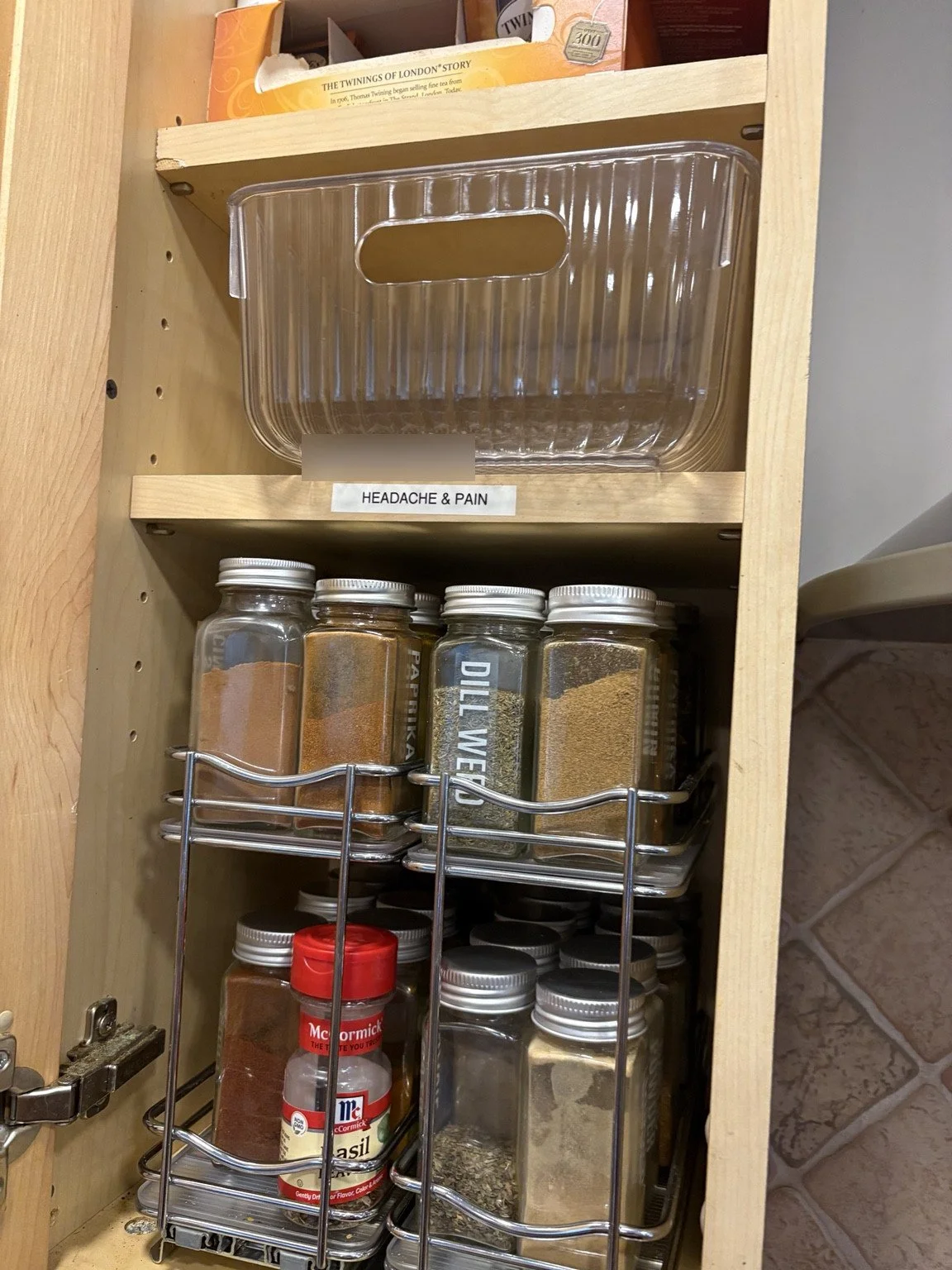
The Cabinet Was 12 Inches Deep. The Bin Still Didn’t Fit.
I wanted a bin to hold several household bottles together on the second shelf of an upper kitchen cabinet.
Because the shelf is high, reaching all the way to the back isn’t convenient. I wanted to be able to pull out the whole bin, get what I needed, and put everything back in.
The cabinet was approximately 12 inches deep overall, so I thought a 12-inch-deep organizer would work.
It didn’t.
Once I accounted for the actual usable shelf space, I had closer to 10 inches of depth available.
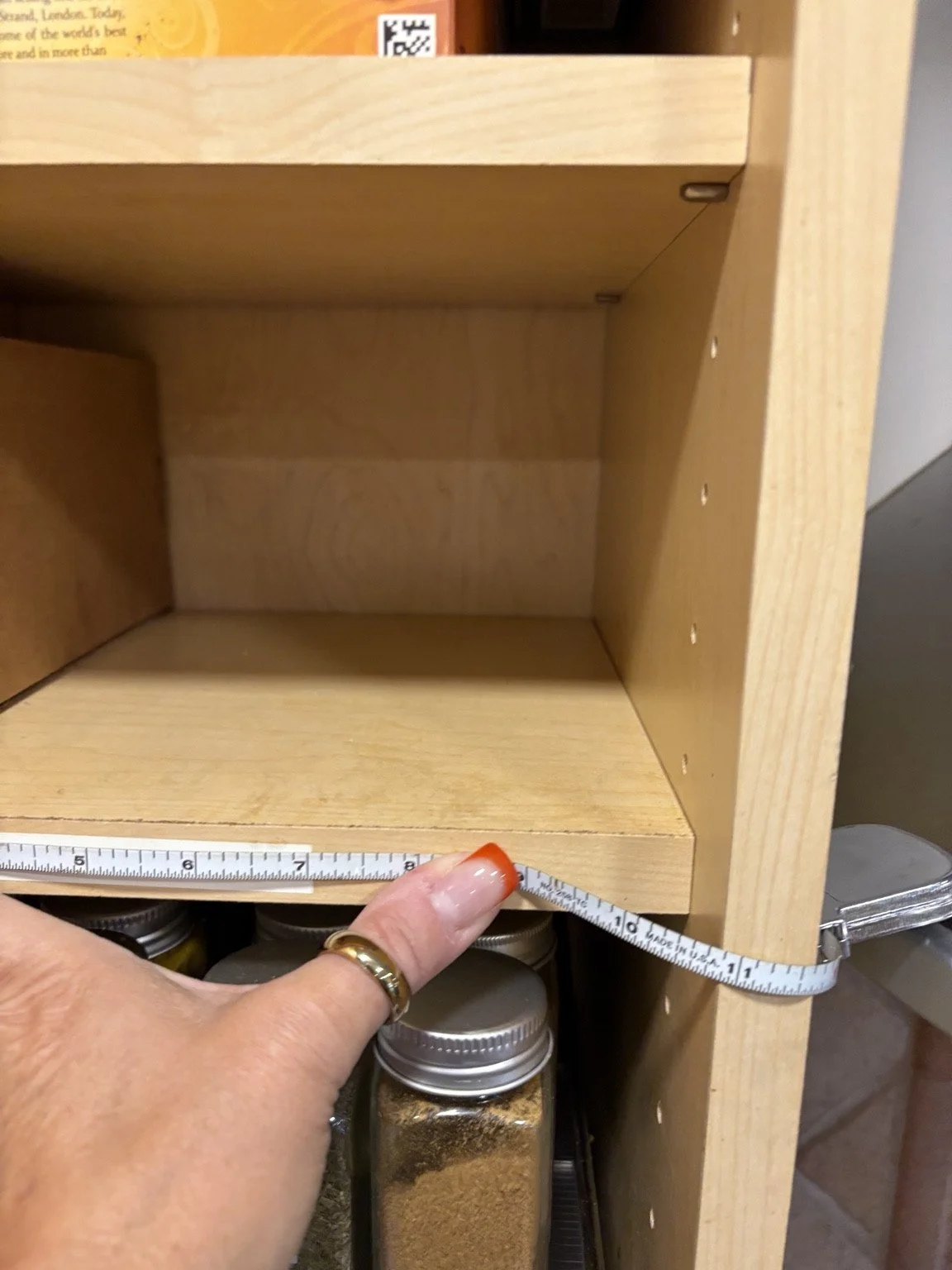
Then I Ran Into a Height Problem
I also tried one of The Home Edit clear bins that I really like.
I use those bins in an upper bathroom cabinet, where their straight sides fit neatly beside one another. They stack instead of nesting, and that arrangement works well in that particular space.
But the six-inch-tall bin was too high for this kitchen shelf.
So I had a different problem with the same cabinet: one organizer was too deep, and another was too tall.
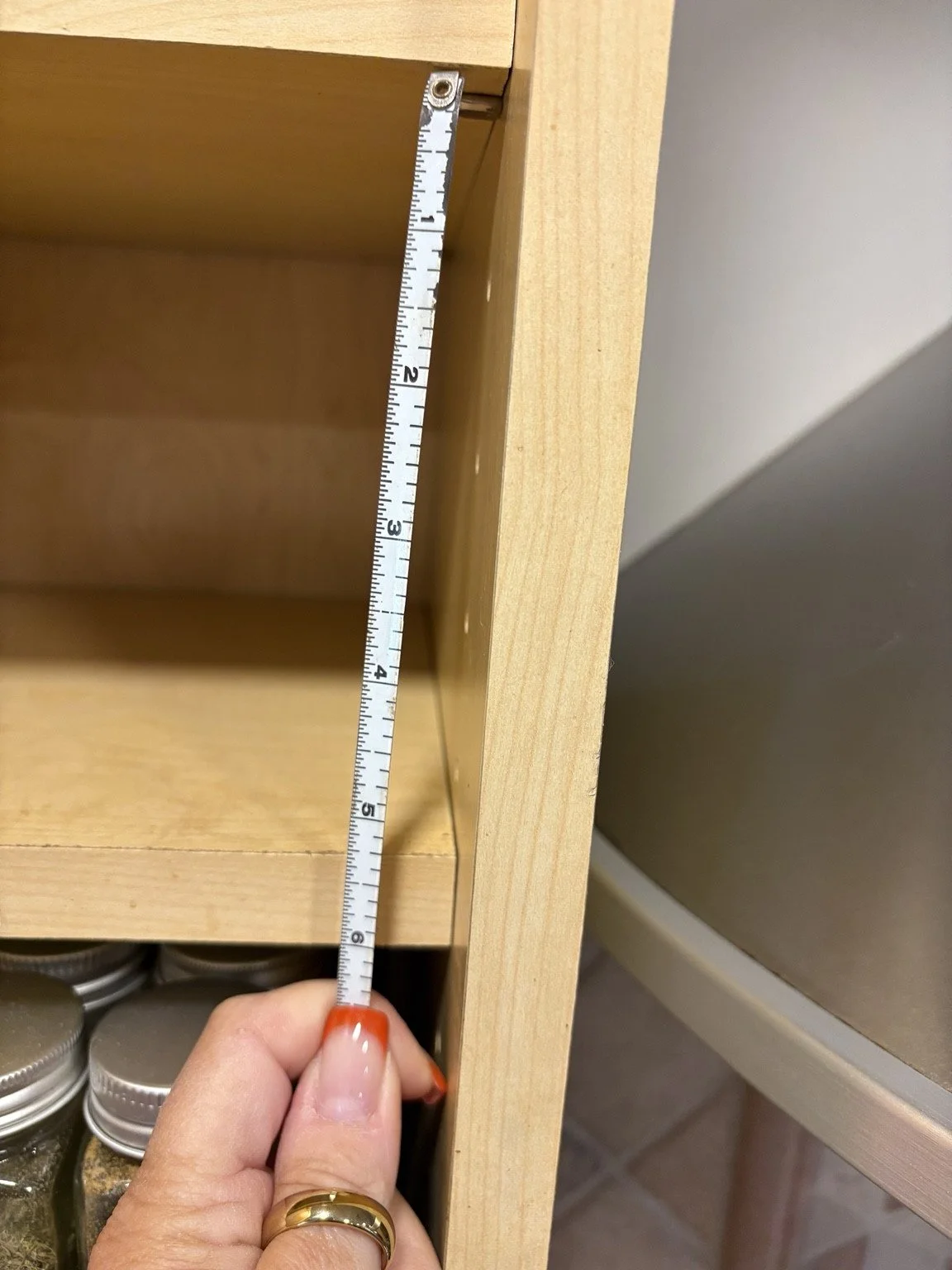
What Finally Worked
I eventually found a clear iDesign Stackable Pantry Bin that fits the kitchen shelf.
It holds the bottles together, and I can remove the bin to reach the contents instead of trying to retrieve individual items from the back of the cabinet.
It’s the type of solution I was looking for in the first place.
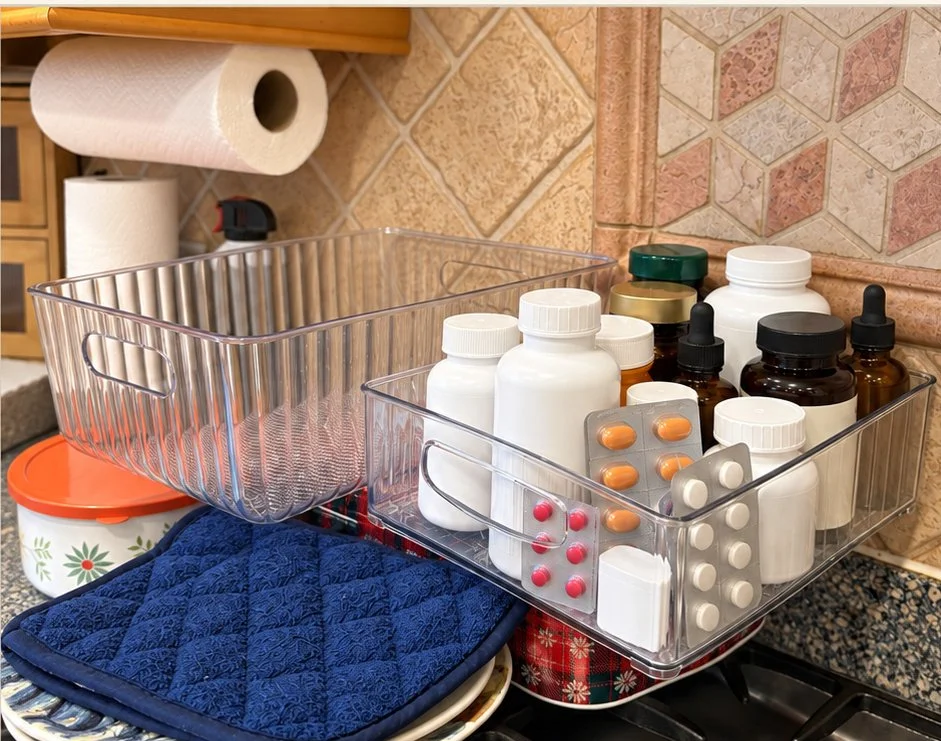
The Tape Measure Habit
After buying multiple organizers that didn’t fit, I’ve become much more particular about measurements.
I keep a tape measure in my top kitchen junk drawer, and I carry another with me when shopping.
I pay attention to the actual usable space inside a cabinet, not just its overall dimensions.
If you’re shopping for organizers, it’s worth checking the shelf depth, the height between shelves, and whether you’ll have enough clearance to get the bin in and out.
A bin can be a good product and still be completely wrong for a particular space.
For me, the measurements now come before the purchase.
This section contains affiliate links. If you buy through them, Everyday Life Support may earn a commission at no additional cost to you. As an Amazon Associate I earn from qualifying purchases.
The Bins and Tools From This Story
For anyone comparing organizers, here are the products from my experience and one measuring tool worth keeping handy. Measure the usable shelf depth and height before ordering, and leave enough clearance to lift the bin in and out.
iDesign Stackable Pantry Bin. (paid link) This is the clear organizer that fits my upper kitchen shelf. I can lift out the whole bin to reach the bottles inside.
The Home Edit clear bin. I bought mine at The Container Store. I use this style in an upper bathroom cabinet, but the six-inch-tall version was too high for my kitchen shelf.
The original clear ribbed organizer. I bought these as a two-pack at HomeGoods. One was about 11.6 inches deep and didn’t fit my kitchen shelf. They’re nice bins, though, and I’ve kept them in case I can use them for another project.
A tape measure. I keep one in a kitchen drawer and another with me when I shop. You don’t need a particular brand, but a compact tape measure is easy to carry when checking shelf depth, height and clearance. Example of a compact tape measure (paid link).
Everyday Life Support — Practical help for life’s moving parts.